The industry describes a company two different ways, and the two descriptions do not always point to the same conclusion. The first is value-chain-layer classification — assembly/EMS, advanced packaging (OSAT), chip/IP design services, or fabrication — which describes what a company physically does. The second is reference-design-compliance classification (§1, §4) — how much of what it sells is Nvidia's own specification executed faithfully, versus the company's own engineering or intellectual property — which describes what a company actually keeps versus rents out. A company can sit in the "assembly" layer by classification and still capture real, defensible margin if what it holds inside that layer is genuinely scarce; a company in a layer that sounds more sophisticated can still be doing thin, reference-design work if that is all its contracts actually specify.
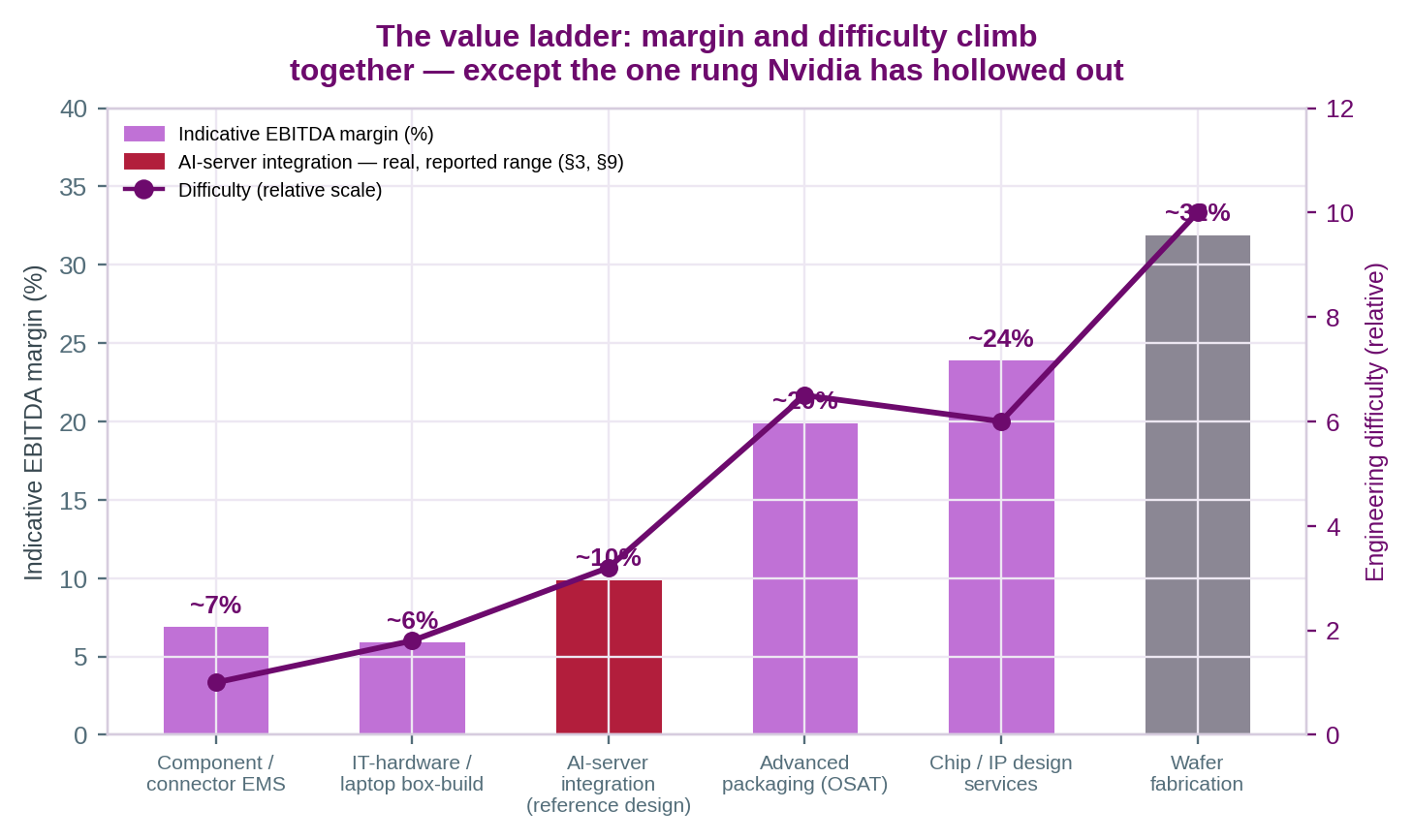
Advanced packaging is the clearest case. On a simple value-chain-layer reading, an OSAT (outsourced assembly and test) facility sits below a branded systems integrator — it never puts its own name on a finished server. Yet a company holding one of India's few operational semiconductor packaging lines can plausibly hold more durable pricing power than a much larger, more visible AI-server assembler, precisely because packaging capacity is a nationally scarce, government-incentivised asset today, while server assembly capacity is not. Brand visibility and revenue scale do not reliably predict where the real scarcity sits in this industry; keep this in mind through §9.
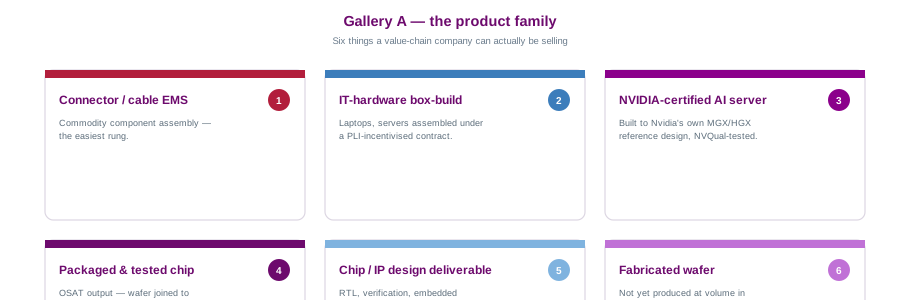
What a value-chain company can actually be selling, arranged from commodity to engineered.
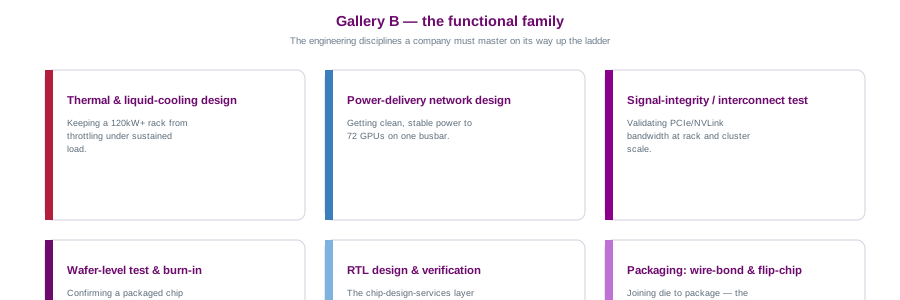
The engineering disciplines a company must actually master on its way up that ladder, whichever company happens to be holding the work at the time.